H1: Exporting Traffic Signs: Standards, Packing, and Testing
🌍 1. Global Demand for Traffic Sign Exports
With rapid infrastructure growth worldwide, the demand for high-quality traffic signs continues to expand across Asia, Africa, Europe, and the Americas.
Professional Traffic Sign Manufacturers play a vital role in meeting international standards, ensuring that exported signs maintain consistency, safety, and long-term durability across different road systems.
⚙️ 2. International Standards and Certifications
Each region enforces its own technical specifications for materials, reflectivity, and installation. The most widely recognized include:
-
MUTCD (USA) — governs color, shape, and retroreflectivity.
-
EN 12899-1 (EU) — covers mechanical stability and material performance.
-
AS 1743 (Australia) — standard for regulatory and warning signs.
-
BS 8442 (UK) — defines sign structure and wind load resistance.
-
ISO 3864 / ISO 7010 — global guidance for safety symbols.
Manufacturers exporting to multiple countries must ensure every sign’s font, legend, reflectivity class, and fixing method match local specifications.
🧪 3. Quality Testing Before Export
To ensure compliance and durability, all exported signs undergo rigorous factory testing, such as:
-
Retroreflectivity (ASTM E810) — verifies night brightness levels.
-
Color stability (ASTM D2244) — ensures long-term chromatic accuracy.
-
Salt spray & corrosion tests (ASTM B117) — critical for coastal destinations.
-
Impact resistance (EN 12899 Annex F) — checks structural integrity under wind load.
-
Packaging vibration test (ISTA 3E) — simulates long-distance transport.
Signs that pass all criteria are serialized and documented for customs clearance.
📦 4. Export Packaging and Logistics
Proper packaging prevents surface abrasion, bending, or delamination during transit.
Common export packaging standards include:
-
PE film + bubble wrap for scratch protection.
-
Corner guards on every aluminum panel edge.
-
Carton boxes + wooden pallets (ISPM 15 heat-treated).
-
Stretch film wrapping for humidity resistance.
-
Customized labeling with product code, size, and customer PO number.
Professional Traffic Products Manufacturers also offer container optimization plans, balancing weight, stacking, and cost efficiency for LCL/FCL shipments.
🚢 5. Export Documentation
A complete export shipment typically includes:
-
Commercial Invoice & Packing List
-
Certificate of Origin (Form A, E, or RCEP)
-
Material & Reflectivity Certificates
-
Inspection Reports & QA Test Records
-
HS Code Declaration (typically 8310.00)
Providing traceable documentation ensures smooth customs clearance and strengthens buyer confidence.
💡 6. Country-Specific Labeling and Language Requirements
Certain markets require bilingual or region-specific legends:
-
EU: Multilingual safety text in official languages.
-
Middle East: Arabic + English dual legends.
-
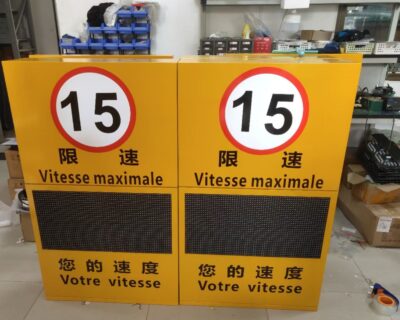
Africa: French/Portuguese bilingual labels.
Manufacturers must verify character spacing, translation accuracy, and layout before printing reflective overlays to prevent rejection or fines.
🧱 7. Shipping and Storage Recommendations
-
Store signs vertically to prevent reflective film compression.
-
Maintain dry, covered storage below 40°C.
-
Avoid stacking reflective surfaces face-to-face.
-
Inspect pallets upon arrival for moisture or shock damage.
Proper handling ensures reflective and structural integrity remains intact upon installation.
🏁 8. Final Thoughts
Exporting traffic signs successfully requires compliance with international standards, thorough pre-shipment testing, and secure export packaging.
Working with an experienced traffic sign exporter ensures reliable quality, regulatory conformity, and cost-effective global delivery — from factory floor to roadside installation.
FAQ
Q1: Which reflective film types are best for tropical climates?
A: Type IX microprismatic films with UV-resistant overlaminates perform best under high humidity and sunlight.
Q2: Can aluminum signs be shipped by air freight?
A: Yes, but packaging must meet vibration and stacking standards (ISTA 2A or 3E) to prevent surface deformation.
Q3: What’s the average export lead time for traffic signs?
A: Typically 20–30 days after order confirmation, depending on production capacity and certification requirements.